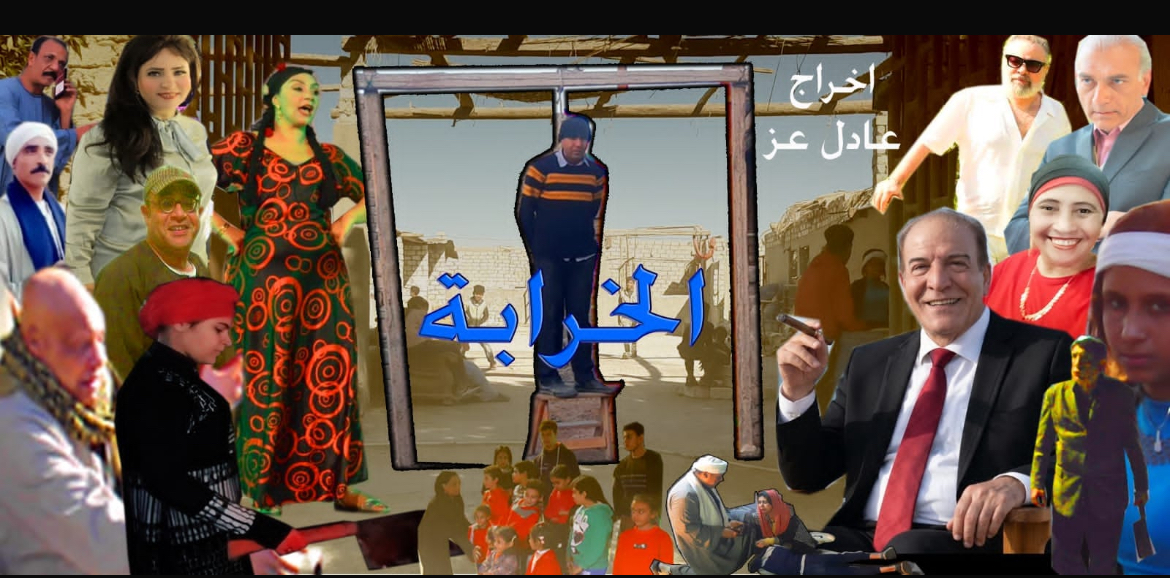
In a bold and deeply human cinematic production, the team behind Al-Kharaba is preparing to tackle a highly sensitive issue that has captured public attention in recent years: child kidnapping and the trafficking of human organs.
Through a dramatic narrative, the film sheds light on the suffering of children and their rights, while raising critical questions about how society can protect minors from exploitation, abuse, and organized crime.
Written and directed by the distinguished filmmaker Adel Ezz, Al-Kharaba unfolds in the tense and harsh world of the “ruins,” where a number of children are kidnapped and exploited. Meanwhile, older children attempt to help the younger ones escape and find their way back to their families, embarking on a dangerous journey filled with dramatic challenges and deeply moving human moments.
The film does not merely expose the darker side of the issue. It also seeks to highlight the power of solidarity among children, their rejection of injustice, and their determination to hold on to hope as they struggle to return to their families in the face of a world driven by criminal greed and the exploitation of vulnerable children in desperate need of protection.
The significance of Al-Kharaba lies in its focus on one of the most vulnerable groups in society: children. Crimes involving child abduction, human trafficking, and the illegal organ trade continue to raise serious concerns among families and communities, underscoring the need for sustained public awareness, effective legislation, and ongoing security efforts.
The film features a distinguished ensemble of artists and media professionals, including:
Abdel Salam El-Dahshan, Ahmed El-Husseiny, Hassan Abdel Fattah, Dr. Ashraf Farouk, acclaimed actress Soher Ezz, actress Sama Adel, Hala El-Husseiny, Doaa El-Khouly, Kadry Abu El-Houl, Sobhi Khalil, media professional Dr. Magdi Kamel El-Hawary, and media professional Sayed Shaarawy.
The production also features Ahmed Hegazy, who contributes the film’s musical compositions, adding further depth to its dramatic and emotional atmosphere.
The film is written and directed by Adel Ezz, with Waheed Hafez serving as executive director and Soher Ezz as assistant director.
Al-Kharaba… When Fear Turns into Resistance
One of the most striking aspects of the film’s concept is that the children are not portrayed solely as victims. Some of them become active participants in an attempt to rescue younger children and help them return safely to their families.
This perspective allows Al-Kharaba to pose a profound humanitarian question:
What happens when the child who needs protection becomes the one trying to save another child?
It is a dramatic premise that has the potential to create a powerful emotional experience, taking viewers into a world marked by fear and loss, while at the same time presenting examples of courage, sacrifice, solidarity, and hope.
Cinema Confronting the Issues Society Often Avoids
Cinema remains one of the most powerful tools for bringing difficult social issues before the public, particularly when sensitive subjects are approached from a human perspective rather than through sensationalism alone.
Al-Kharaba is expected to attract considerable attention, not only because of its subject matter, but also because it tackles an issue directly connected to children’s safety, family stability, and society’s ability to protect minors from becoming victims of exploitation and criminal networks.
The real challenge for the filmmakers will be to present the issue through an emotionally compelling dramatic treatment while maintaining a strong sense of social responsibility.
At its core, the film delivers a clear message: a child is not a commodity, and protecting children is a responsibility that begins with the family and extends to the institutions of the state and society as a whole.
Al-Kharaba ventures into an extremely sensitive area, bringing to the screen an issue that demands greater awareness, vigilance, and collective action.
 As audiences await the announcement of its release date, the coming period will reveal how viewers and critics respond to this ambitious cinematic experience.
Written and Directed by: Adel Ezz
Executive Director: Waheed Hafez
Assistant Director: Soher Ezz
Music: Ahmed Hegazy